
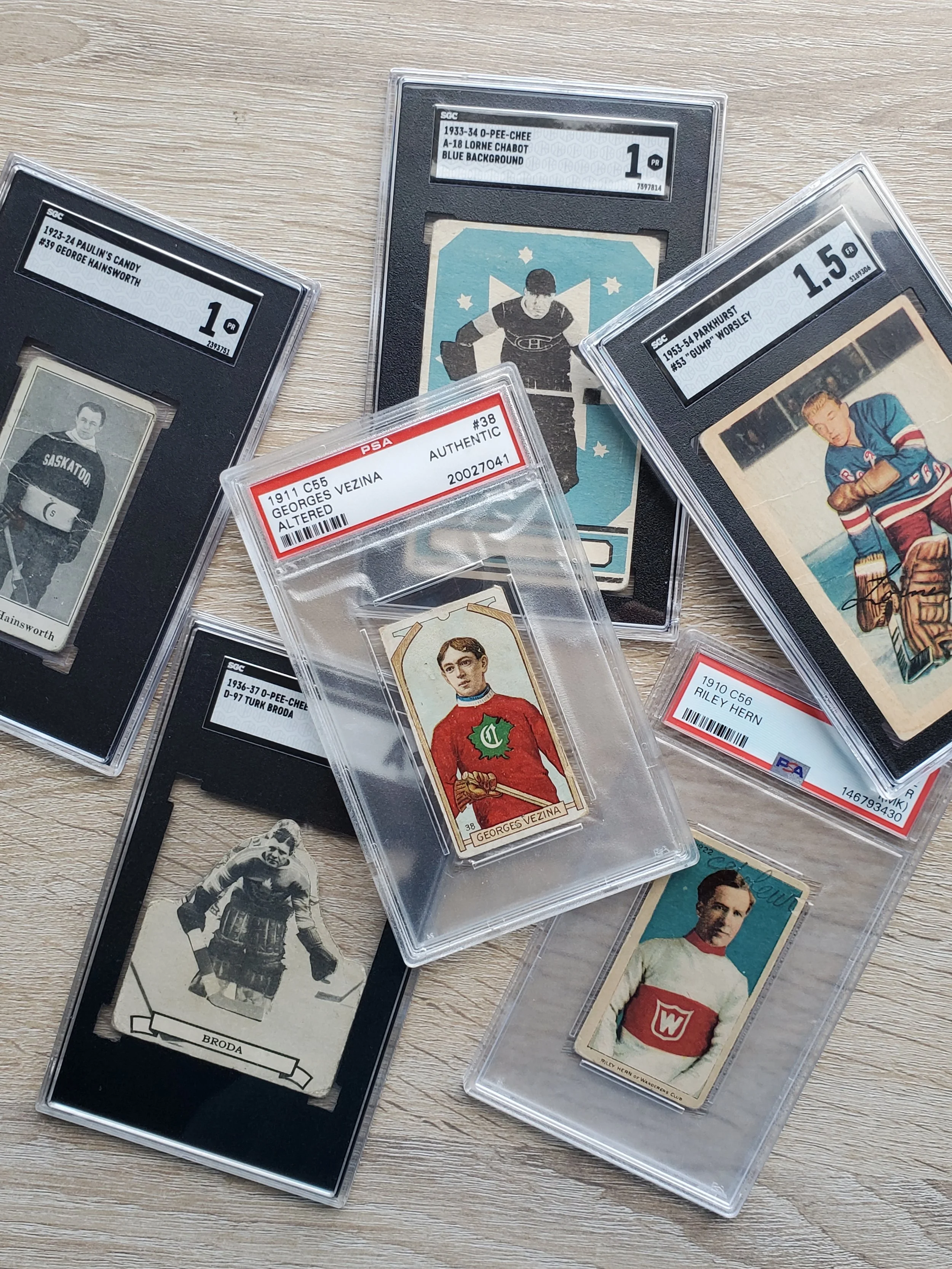
Sometimes the best card isn't the best card on the market. Getting ready for Toronto Expo
As Collectors Prepare for the Toronto Expo in early November, I decided to drop this blog. Sometimes the best way to build a great pre-war hockey card collection is to stop worrying about owning the best examples.
I have gotten into plenty of debates with seasoned collectors about buying low-grade or altered/authentic pre-war rookie cards.
Many seasoned collectors swear by buying the highest grade possible. Easy to say when you've been collecting for decades and remember when a Georges Vézina PSA3 cost $3500.
But for newer collectors, spending a couple of mortgage payments, or even a small annual salary, on a single hockey card might keep you on the sidelines rather than in the game.
When I started collecting, I decided early on that I'd rather own a lower-grade example and get into the game. If I felt the need to upgrade that card later, I would.
Although not pre-war, my Marc-André Fleury YG journey is a perfect example. I started with RAW, then a PSA 7, upgraded to an SGC 9.5, then went all in on a PSA 10, and recently downgraded to a Beckett 9.
Yes, downgraded.
I decided to take the difference and reinvest the cash in building a 1910 C56 set.
The Argument for Buying the Best
This is a reasonable thought process.
Higher-grade pre-war cards are more desirable. I can speak to that personally, having sold high-grade examples for a profit. But because of the high price, they can take longer to resell and get tied into other deals: "I have to sell this before I can buy yours."
I understand the Buy the Best philosophy, and I don't necessarily disagree with it, particularly if you've been collecting for years and can sell older examples to top up a higher-grade purchase.
But I think some deeply invested hobbyists overlook something important.
Not everyone collects hockey cards as an investment, and not everyone has an unlimited budget.
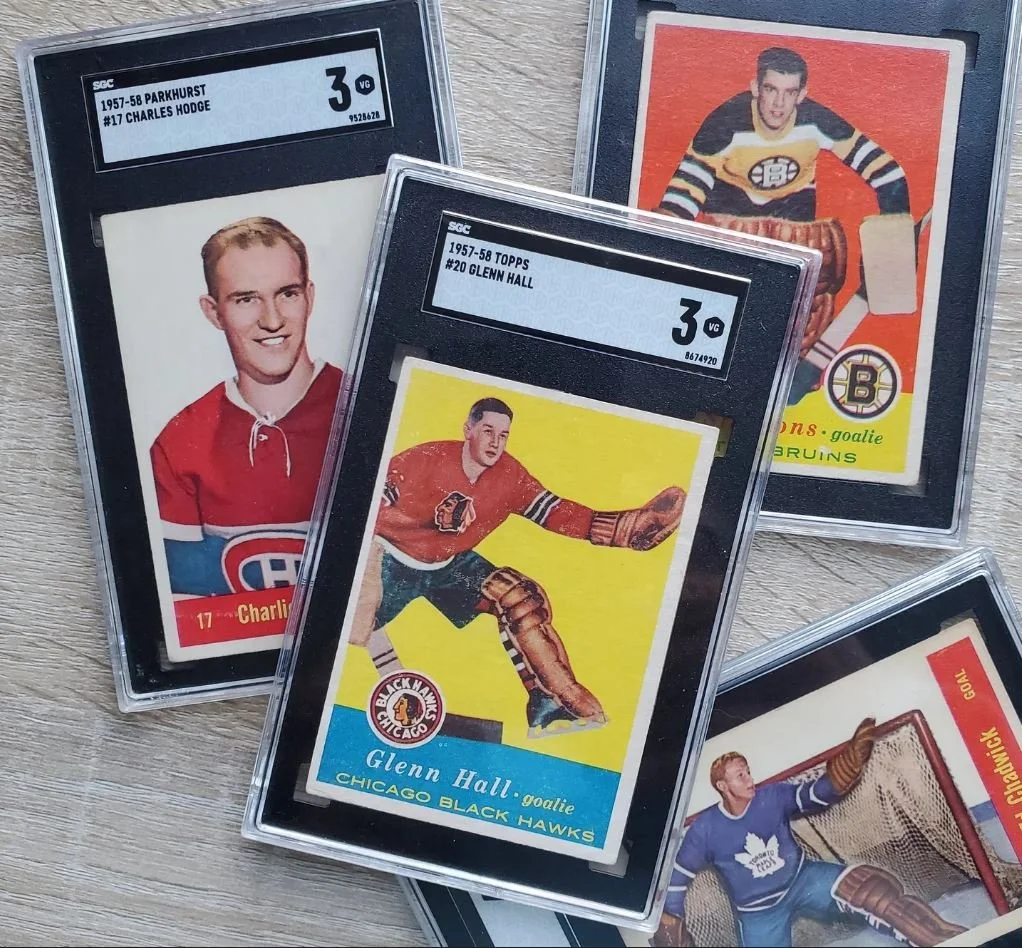
Flexichrome: How Topps Brought 1957 Hockey Cards to Life
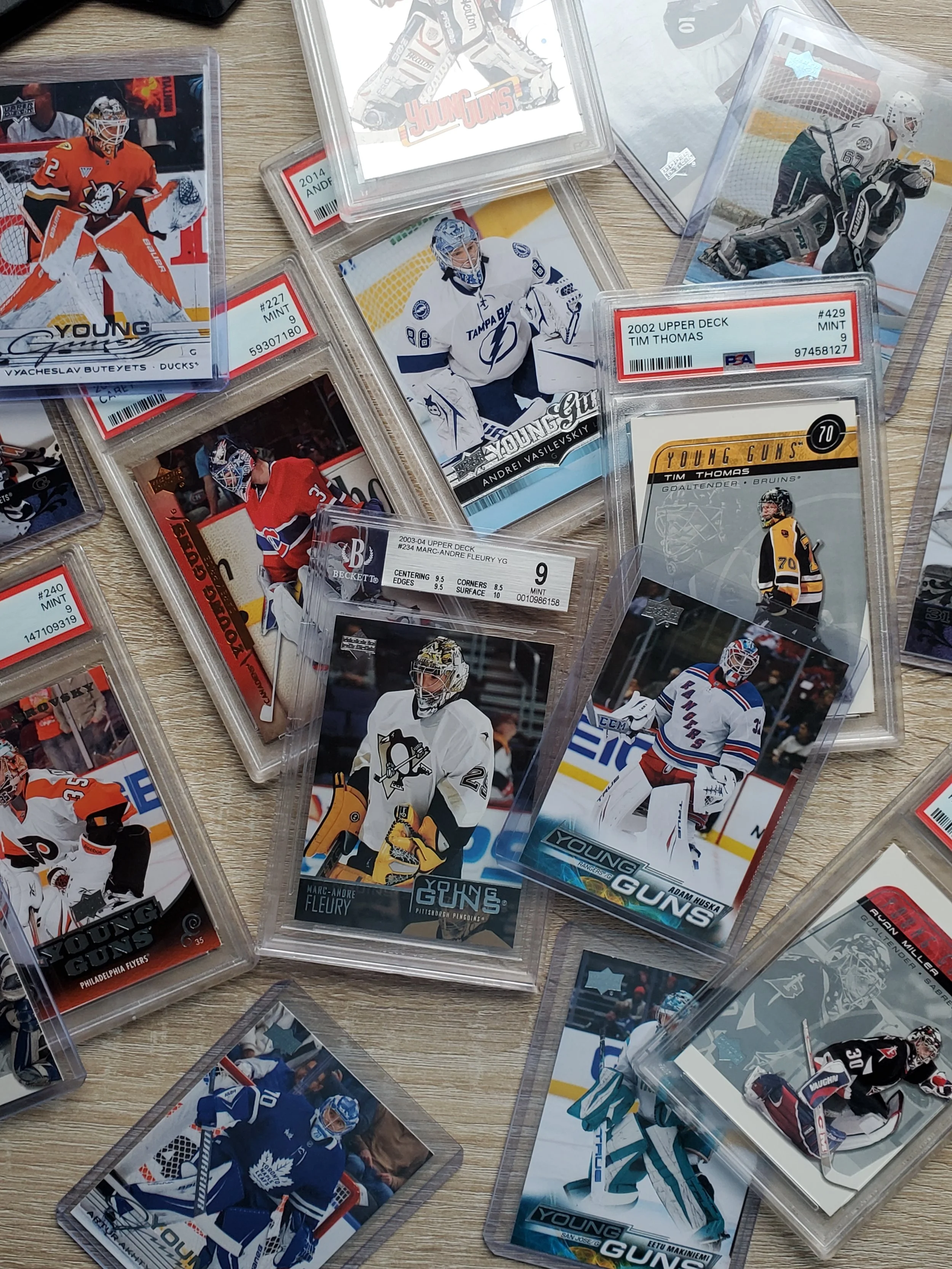
Young Guns: How Upper Deck Created Hockey’s Rookie Card Standard

PSA Hell: 1972-73 Goalie Rookie Cards

Bill Durnan: How Can Your Rookie Card Come Out Four Years After Your Rookie Card?
Bill Durnan 1951 rookie card

The Night Three Maple Leafs Defencemen Became Goalies

The Skate Save, Captured on Card: Proof 1980s Goalies Occasionally Made Saves

La Parade Sportive: Quebec’s 1940s Hockey Card-ish Thing

Pacific Omega: The Card Company That Got It All WRONG. “Welcome to the NHL. Here’s Half a Card.”

Jim Carey: The Vezina Winner Who Vanished From Hockey Cards

The Complicated History of Be A Player, In The Game, Leaf and President’s Choice Hockey Cards

1984 Los Angeles Kings Smokey Card Series

Hugh Plaxton: The Goalie Who Wasn’t a Goalie

When More Wasn't Better: The Cluttered Design of 1990s Hockey Cards
the 1990s hockey card design was busy boarding almost kitsch.

1965-66 Coca-Cola Hockey: Before $500 Hobby Boxes, There Was Coke
1965 Coca Cola Cards

Miikka Kiprusoff Rookie Card: Apparently Finland Called Dibs
1994 Miikka Kuprusoff PSA 10

1980s Goalie Rookie Cards: The Warmup Photo Era
1980s goalie rookie cards

Darren Jensen: Technically, I Bought 264 Cards I Didn't Want
Darren Jensen from the 1986 0-Pee-Chee sticker set.

Why Diamond Matchbooks Matter to Vintage Goalie Rookie Card Collectors
Diamond Matchbooks for Harold Starr and Andy Aitkenhead
