
One of the most recognizable goalie rookie cards of the 1950s is Glenn Hall's from the 1957–58 Topps set. It has a distinctive appearance that falls somewhere between a photograph and a painting, thanks to a process known as Flexichrome.
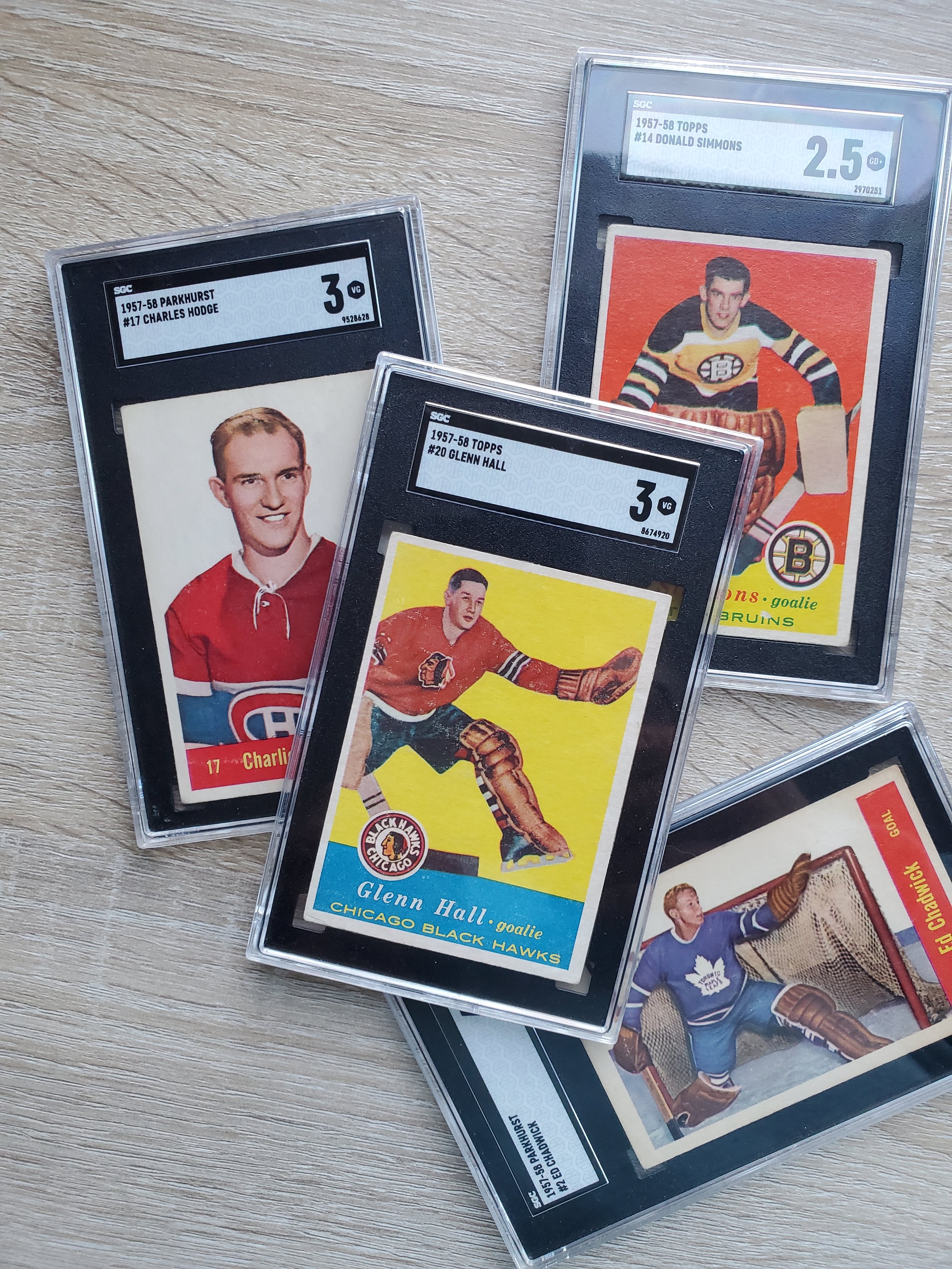
What Was Flexichrome?
Before color photography, card manufacturers worked with black-and-white photographs. However, Flexichrome allowed artists to transform BW photographs into full-color images by applying special transparent dyes to a photographic surface.
Originally developed in the 1930s, the process was later acquired by Kodak, which introduced an improved version in 1949; it was often used for hockey cards in the 50s, peaking with the 1957 Topps set.
Flexichrome preserved the underlying photograph's details, including facial features, shadows, and highlights. Artists applied dyes to a specially prepared gelatin surface, carefully building up colors while maintaining the original photograph's realism.
Advantages
One of Flexichrome's biggest advantages was the control it gave artists. Artists could adjust, intensify, or correct colors without completely repainting the image. This made the process particularly useful for advertising, portraiture and commercial printing.
For sports-card manufacturers like Topps, photographic retouching also provided a practical solution when players changed teams. An artist could alter a uniform's colors or appearance without requiring an entirely new photograph.
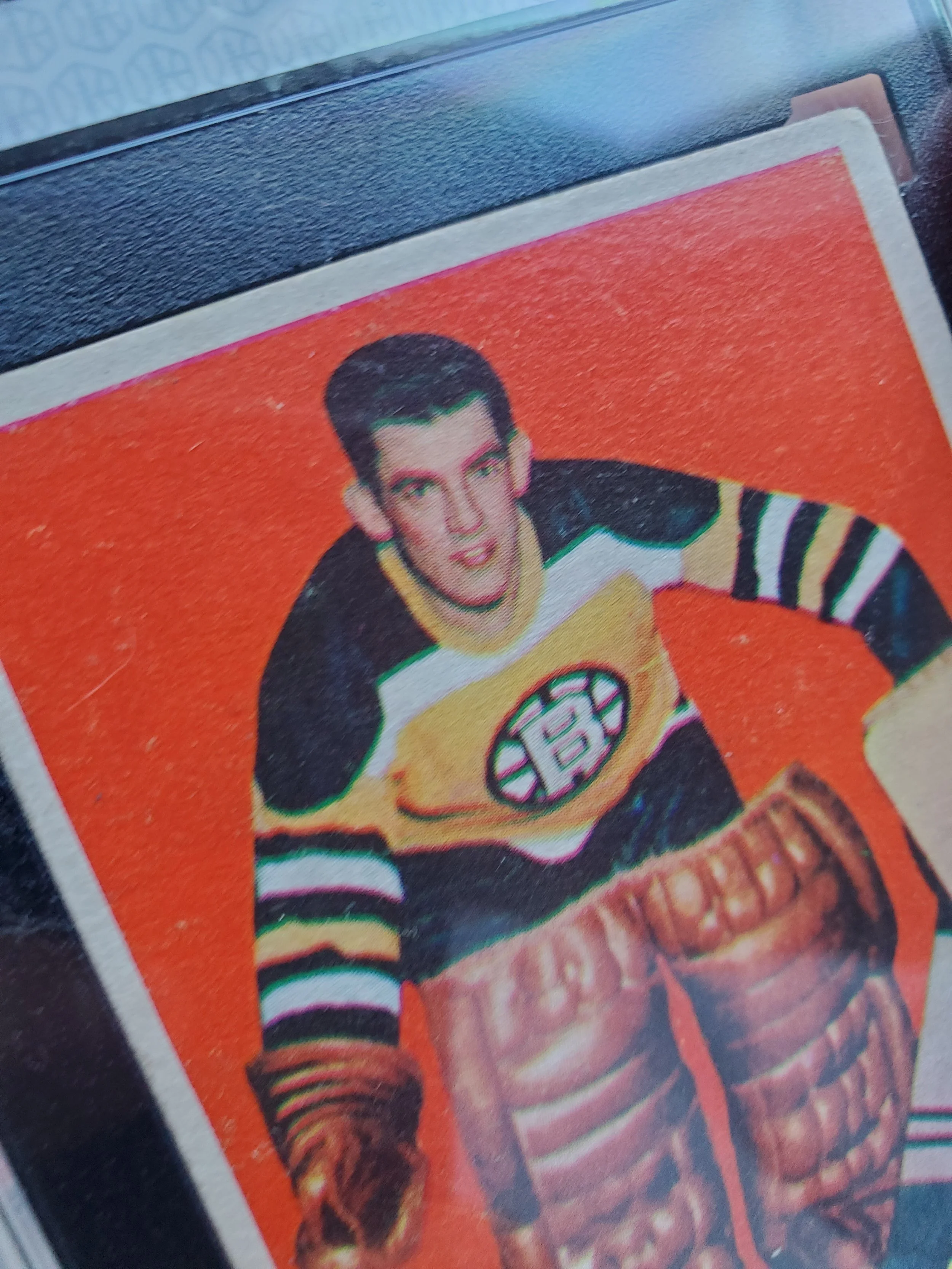
The results were often striking. Players appeared almost painted, with unusually smooth skin tones, rich colors and a slightly artificial quality that has become part of the charm of vintage hockey cards from the 1950s.
The Flexichrome Artwork Behind Glenn Hall's Rookie
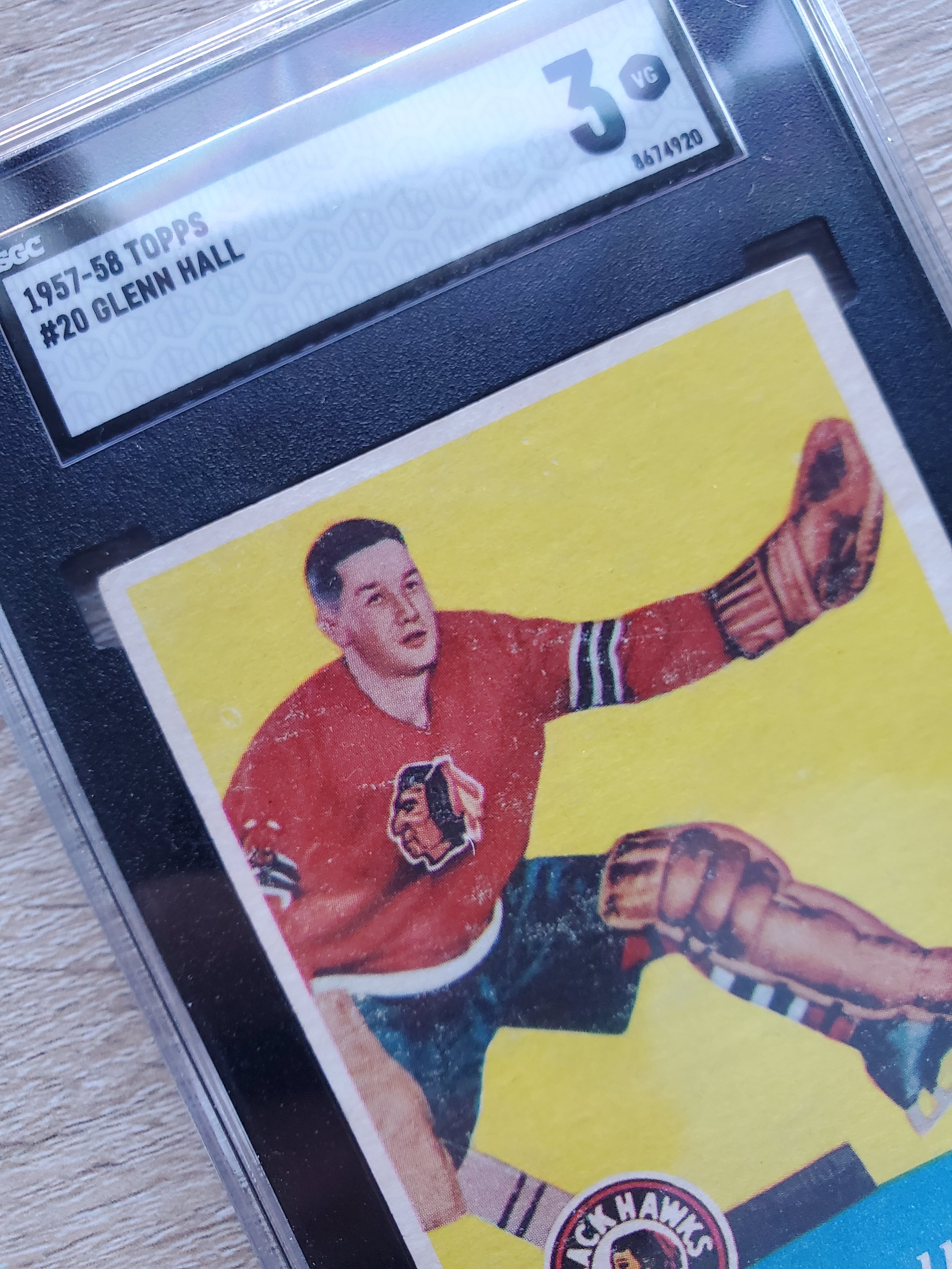
Hall's 1957–58 Topps rookie is especially interesting because he had just been traded from the Detroit Red Wings to the Chicago Blackhawks.
Rather than relying entirely on a new photo, Topps used photographic retouching to show Hall in the Hawks Jersey. If you look closely at the logo, you will see it’s just a bit off.
The finished card, however, is an example of the period's commercial artwork.
Original Flexichrome Artwork Still Exists
Perhaps the most fascinating part of this story is that original Flexichrome artwork from the 1957–58 Topps hockey set has survived. These pieces are collected much like modern hockey card printing plates are today.
An original Flexichrome piece used for Gordie Howe's 1957–58 Topps card sold at the famous 1989 Guernsey's Topps auction for $1,600, plus the buyer's premium.
A Lost Art of Hockey Card Production
By the end of the 1950s, Topps hockey card design was beginning to shift toward more conventional color photography, so hand-coloring and photographic retouching gradually became less central to card production. Topps phased out Flexichrome pretty much by 1962.
Glenn Hall's rookie card isn't simply a photograph of one of hockey's greatest goaltenders. It's also a small piece of commercial art history, produced during a period when photographers, retouchers, and illustrators worked together to create sports cards.
