
I have gotten into plenty of debates with hockey card collectors about buying low-grade or altered/authentic pre-war rookie cards.
Many seasoned collectors swear by buying the highest grade possible. Easy to say when you've been collecting for decades and remember when a Georges Vézina PSA3 cost $3500.
But for newer collectors, spending a couple of mortgage payments, or even a small portion of an annual salary, on a single hockey card might keep you on the sidelines rather than in the game.
When I started collecting, I decided early on that I'd rather own a lower-grade example and get into the game. If I felt the need to upgrade that card later, I would.
Although not pre-war, my Marc-André Fleury YG journey is a perfect example. I started with RAW, then a PSA 7, upgraded to an SGC 9.5, then went all in on a PSA 10, and recently downgraded to a Beckett 9.
Yes, downgraded.
I decided to take the difference and reinvest the cash in building a 1910 C56 set.
The Argument for Buying the Best
This is a reasonable thought process.
Higher-grade pre-war cards are more desirable. I can speak to that personally, having sold high-grade examples for a profit. But because of the high price, they can take longer to resell and get tied into other deals: "I have to sell this before I can buy yours."
I understand the Buy the Best philosophy, and I don't necessarily disagree with it, particularly if you've been collecting for years and can sell older examples to top up a higher-grade purchase.
But I think some deeply invested hobbyists overlook something important.
Not everyone collects hockey cards as an investment, and not everyone has an unlimited budget.
Sometimes Just Owning the Card Is Enough
I'm a completionist. When I decide to build a PC, I want to finish it. That means I'm perfectly comfortable buying a PSA 1 or an authentic graded card.
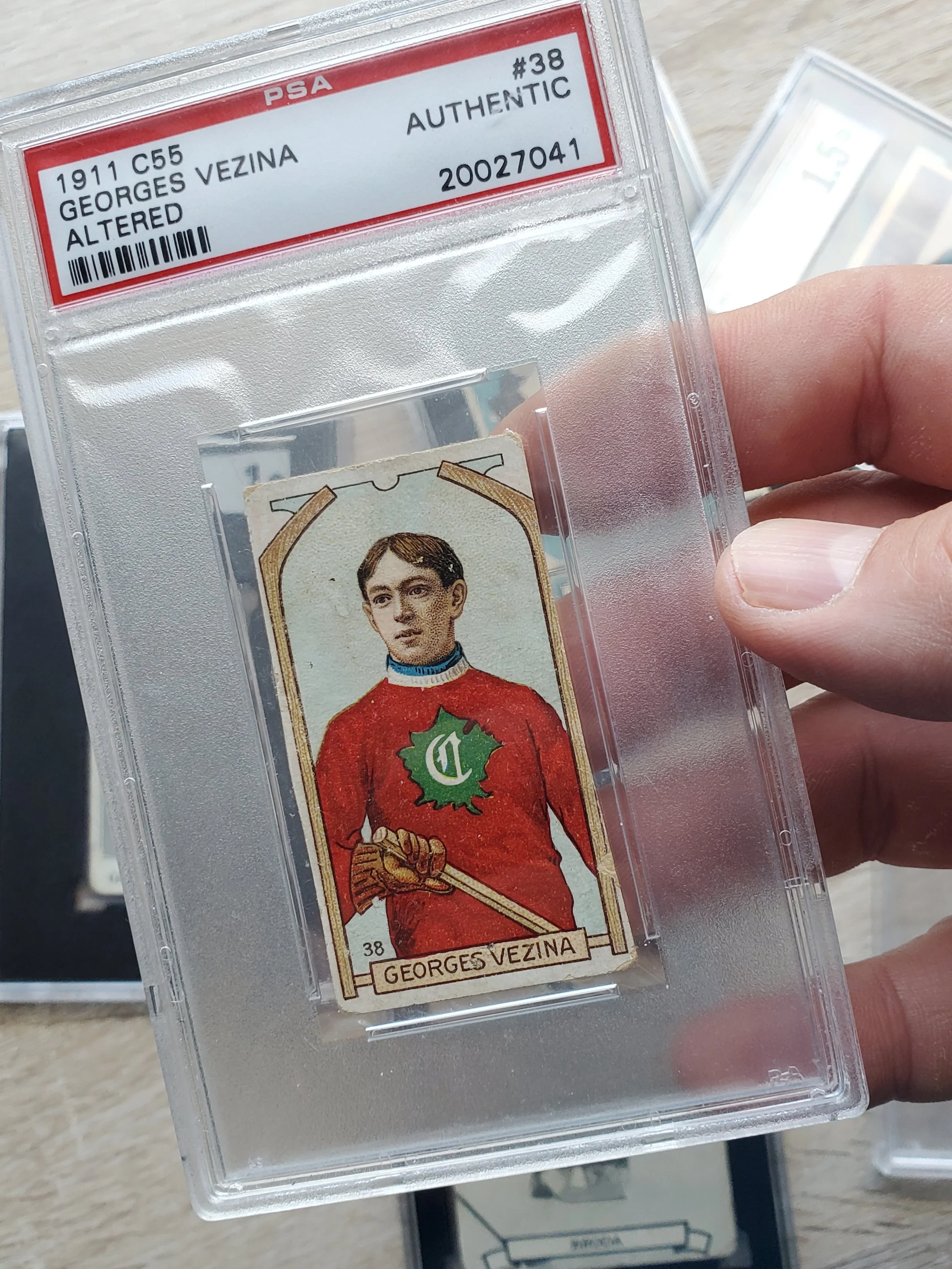
My 1911 Georges Vézina rookie card is a perfect example.
When I started looking seriously at purchasing one, I was facing prices around $10,000 for a PSA 1. That's a substantial amount of money for a single hockey card, especially when you're also trying to complete an ambitious PC like mine.
The problem was that I also needed a 1923 George Hainsworth rookie and a 1910 C56 Art Ross, among many other pre-war rookie cards.
I could have put my entire collecting budget toward a PSA 1 Vézina, or I could look for an alternative that would let me keep building the collection.
I chose the latter.
I eventually purchased a PSA Altered Vézina for less than half the price of a PSA 1. The alteration was properly disclosed, and more importantly, the price reflected it.
I know some collectors will cringe at that decision.
But here's the thing. Once I received the card, I was genuinely happy with it. I had my Vézina rookie, and I could move on to the next card.
I honestly don't feel any need to upgrade the Vézina.
In fact, I don't even look at the Vézina all that often. There are plenty of 1990s goalie rookie cards in my collection that I enjoy looking at more.
The other reality is low-grade pre-war cards are very liquid; they always sell fast. They may not always sell for the price you want, but they move quickly, often selling within days of being offered on the market.
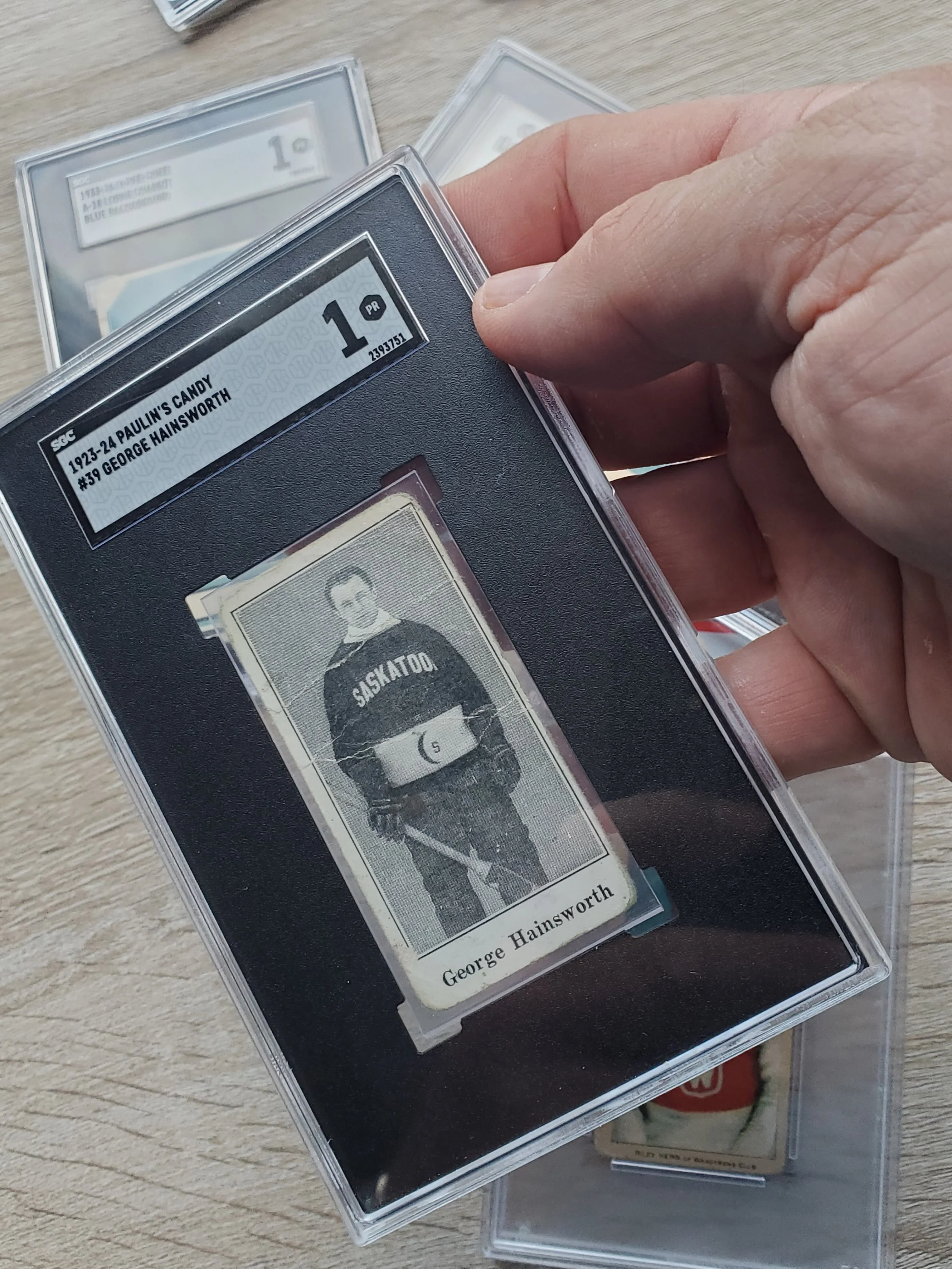
The Beauty of Low-Grade Pre-War Cards
One of the things I appreciate most about pre-war hockey cards is that they weren't pre-sealed in plastic holders and stored in climate-controlled rooms. Kids handled them, traded them, carried them around, glued them into scrapbooks, and sometimes left them forgotten in boxes for decades.
A rounded corner, a crease, or some surface wear doesn't bother me nearly as much on a card that's more than 100 years old.
In some ways, those imperfections are part of its history.
Of course, there's a difference between honest wear and alteration. Collectors should know exactly what they're buying, particularly when dealing with expensive pre-war cards.
When I buy low-grade pre-war cards, I typically go for graded versions. At that price level, I want some assurance that the card is genuine, even if it isn't in particularly good condition.
And therein lies another debate.
Buy the card, not the grade.
Which, ironically, is a whole other discussion.
Build the Collection You Want
If I'd listened to every seasoned collector and, worse, a dealer who gave me advice on what I should and shouldn't buy, I probably never would have started my project of collecting a rookie card for every goalie who has ever played in the NHL.
I estimate that 90% of my collection would certainly be sold at a loss. Another 5% of my PC is moderately desirable — let's say break-even — and perhaps 5% would be considered highly desirable by the broader hobby; I could make a profit.
And I'm perfectly fine with that.
The collection was never intended to be an investment portfolio. I have real estate for that. My PC, the Goalie Archive, is a personal project built around hockey history and goalies.
If your goal is to assemble the finest-known set or collection, win a PSA Registry or collect the best possible examples of a particular player, condition will obviously matter.
But if your goal is to own a piece of every player's history, complete a pre-war set, or enjoy the cards, there's absolutely nothing wrong with starting at the bottom of the grading scale.
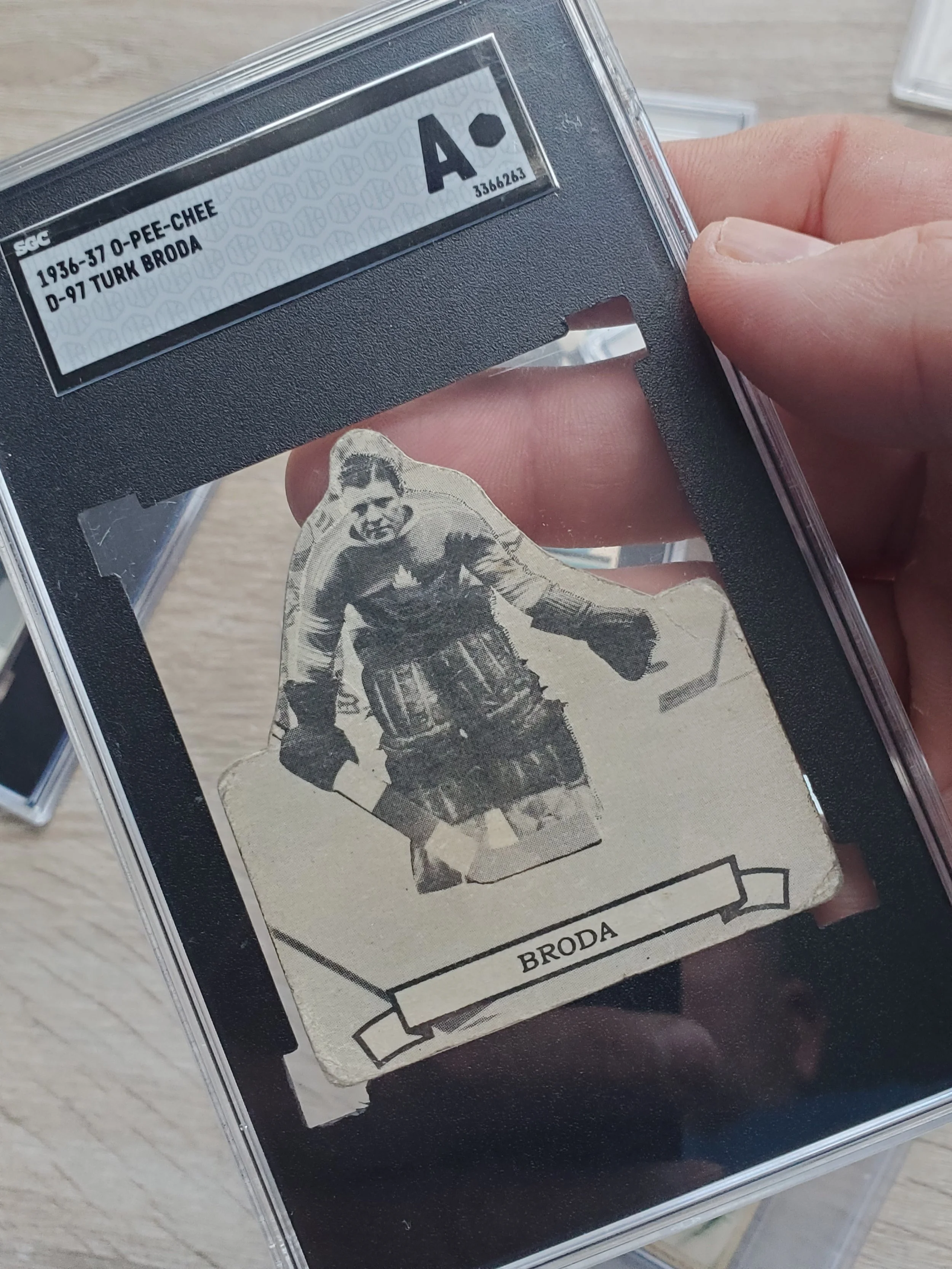
A card sitting in your collection today is a lot more enjoyable than one you've spent five years "thinking" about buying.
You can always sell, trade, or upgrade a low-grade card when a better example comes along.
Although, as my Vézina has taught me, sometimes you discover you don't really need to upgrade at all.
My philosophy is pretty simple: I'd rather have a collection full of cards I love than a collection full of empty spaces waiting for cards I can't afford.
Buy the card. Upgrade when you can.
