
Pacific Omega: The Card Company That Got It All WRONG. “Welcome to the NHL. Here’s Half a Card.”
Pacific Omega came charging out of the junk-wax era as someone had just discovered foil.
Pacific introduced Omega hockey for the 1997-98 season, with the original release consisting of 250 cards. The idea was simple: take NHL photography, add etched foil, and make the whole thing look considerably more expensive than traditional cardboard.
And they are unmistakably 1990s.
The early Omega cards featured large player photographs surrounded by metallic design elements. By 1998-99, cards were being printed on etched silver foil, while 1999-00 Omega combined full-color action photography with smaller silver-foil player images.
Subtle they were not.
Omega arrived after the worst of the early-'90s junk-wax explosion, when card companies were desperately trying to figure out what collectors wanted next. Pacific's answer was more foil, more inserts, more parallels, and supposedly scarcer cards.
The funny thing is, some Omega cards really are rare.
That doesn't necessarily make them valuable.
Most regular Omega cards remain inexpensive today, often selling for only a few dollars. Even some extremely scarce parallels don't command huge prices because the demand simply isn't there. It's a perfect example of one of my favorite rules of hockey-card collecting:
Rare doesn't always mean valuable.
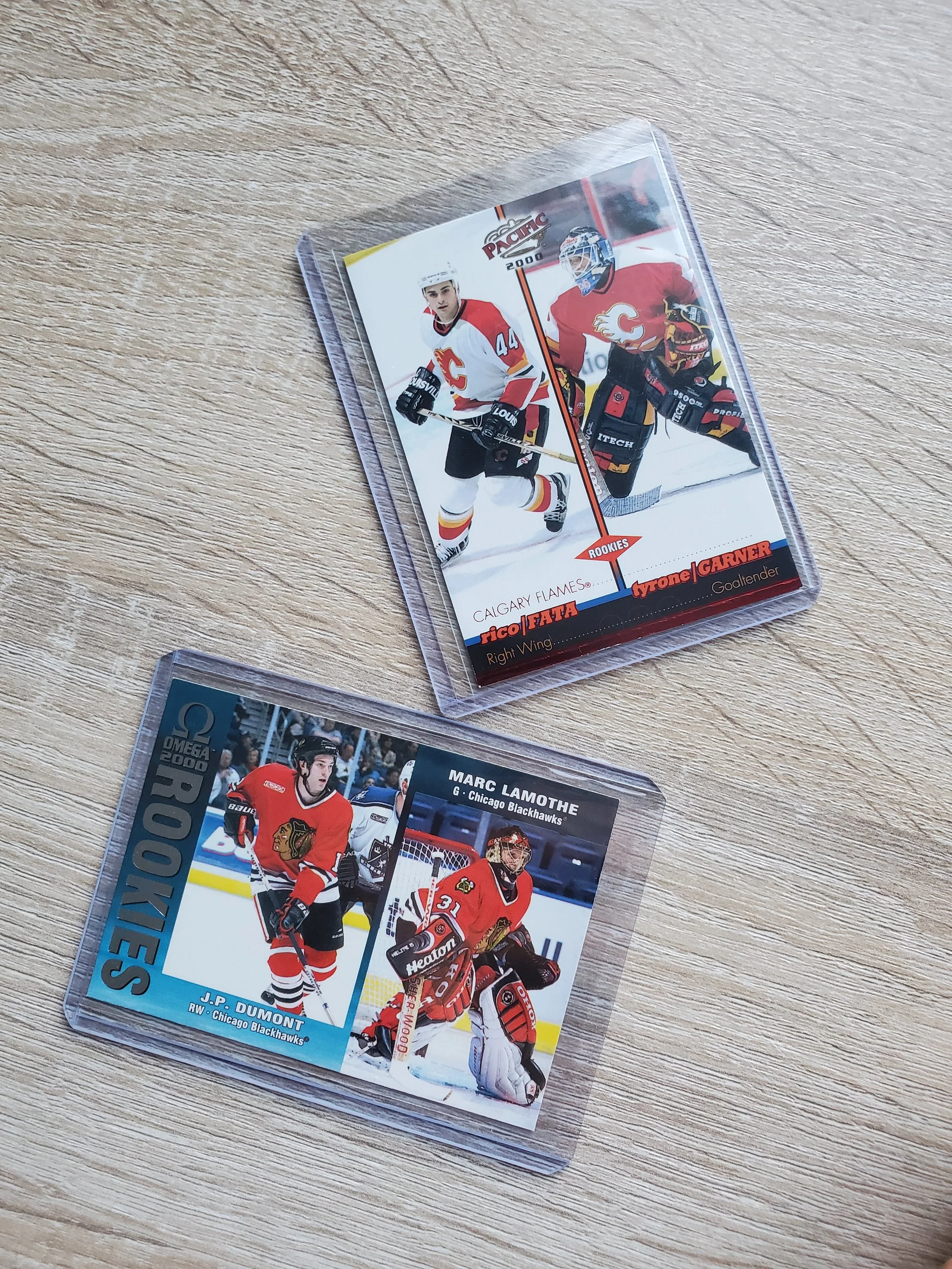
For the Goalie Archive, however, Omega gets interesting because of its strange dual-player goalie rookie cards.
The 1999-00 Omega set sometimes put two young players from the same organization on a single rookie card.
One example is #15 Petr Buzek / Scott Fankhouser.
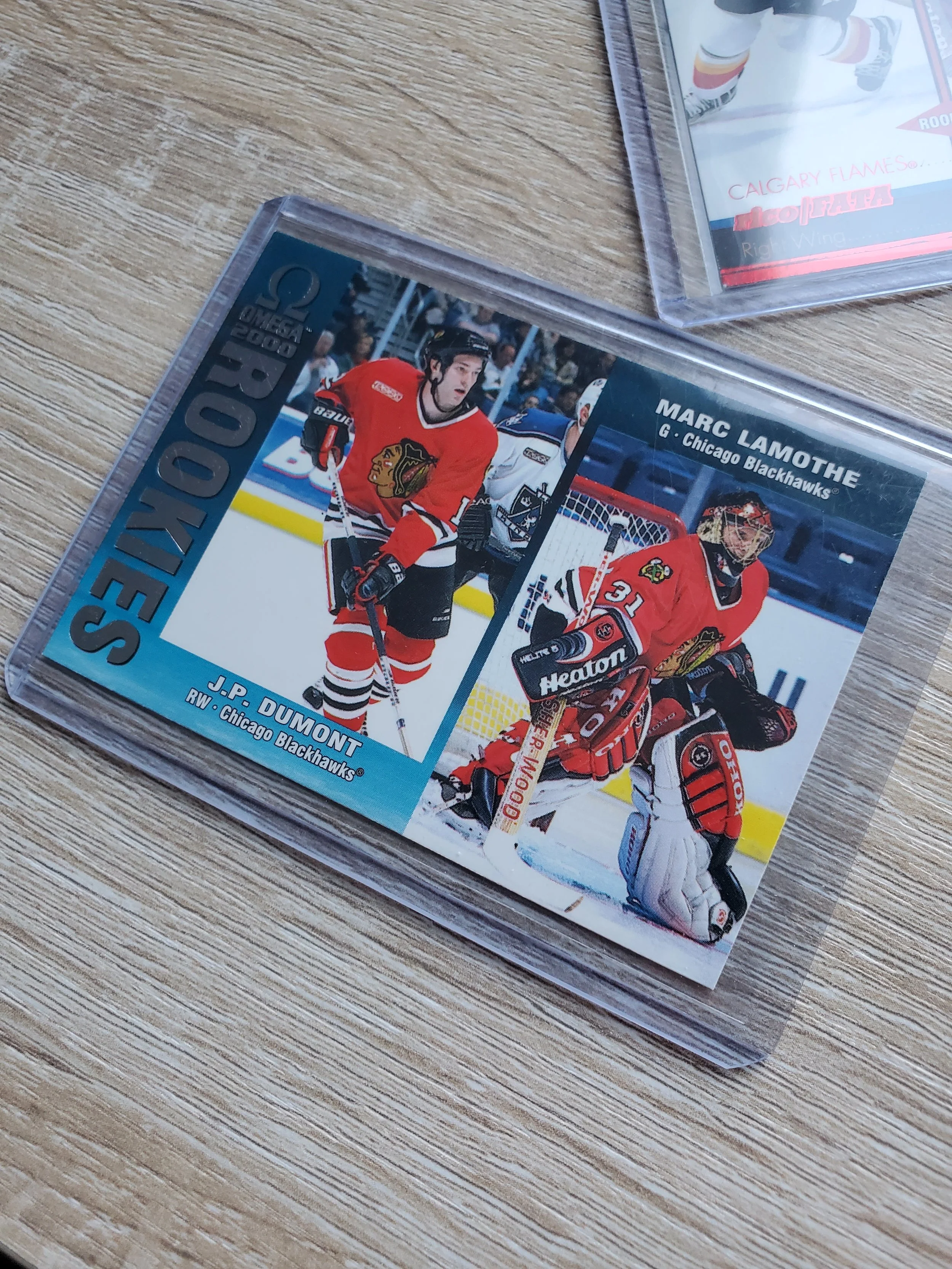
Fankhouser was an Atlanta Thrashers goalie who eventually appeared in 23 NHL games. Yet there he is on his Omega rookie, sharing half the cardboard with defenceman Petr Buzek.
Congratulations on making the NHL, Scott.
Here's half a hockey card.
And Omega's story and run was unsurprisingly short.
It debuted in 1997-98 and disappeared after 1999-00, giving hockey collectors just three seasons of shiny, foil-covered excess. Pacific continued producing hockey cards under other brands, but Omega was finished.
