
I've always found stick memorabilia cards particularly interesting.
One of the earliest documented hockey cards containing an actual piece of a game-used stick appeared in the 1999–2000 Upper Deck Black Diamond Piece of History insert set. The set featured game-used stick memorabilia from players such as Steve Yzerman and Eric Lindros, with some cards containing two stick pieces.
It was a revolutionary product.
Jersey cards are relatively easy to make, but sticks? How did they do that? The answer involves some surprisingly precise cutting and a little creative engineering.
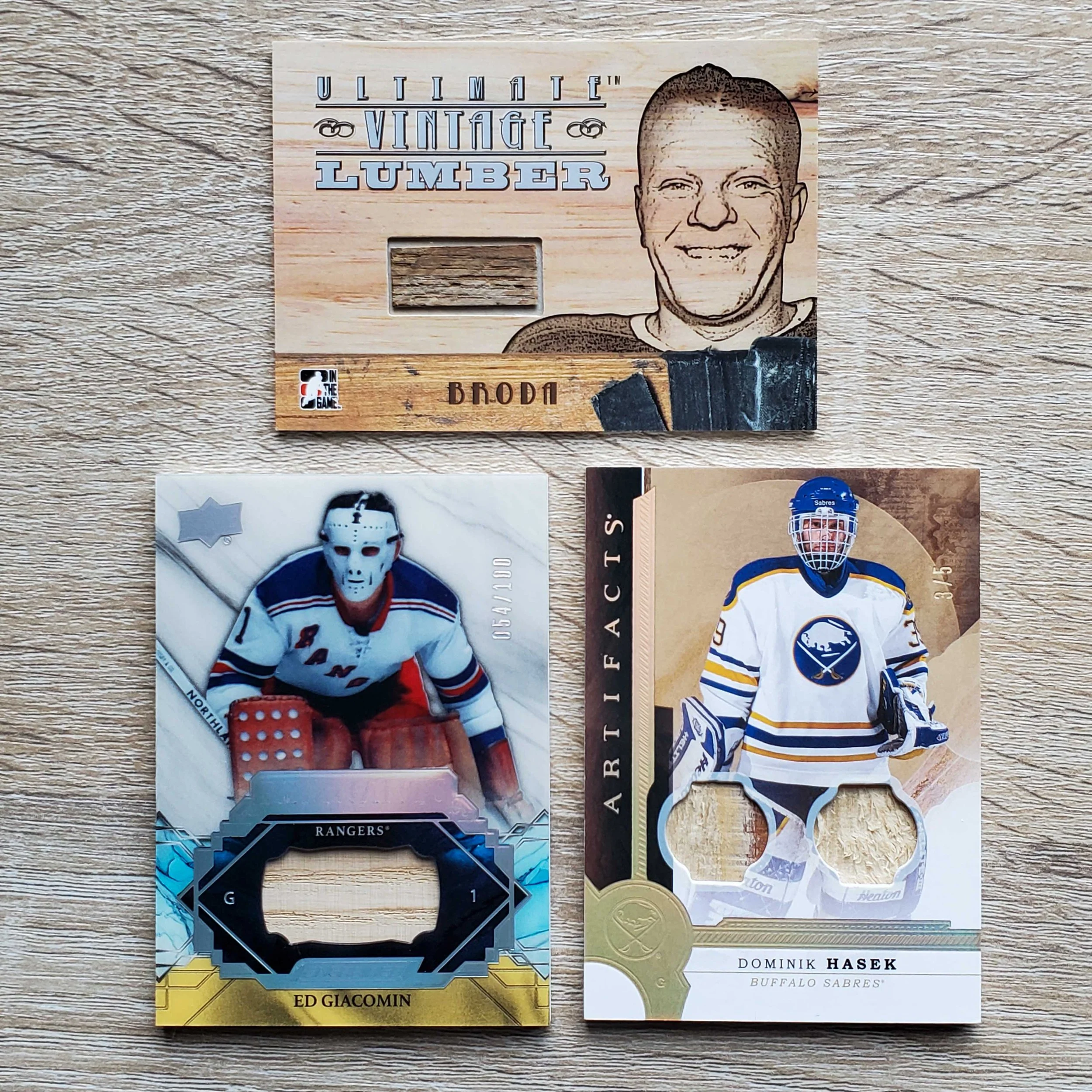
Turning a Hockey Stick into a Card
The process begins with the stick itself. Depending on the player and era, this could be a traditional wooden stick or a modern composite model.
Traditional wooden sticks are cut into smaller blocks, then sliced into thin veneers with fine-toothed saws. With older wooden sticks, makers often take thin slices from the shaft. These shaft pieces sometimes reveal the natural wood grain, painted surfaces, or parts of the manufacturer's graphics, which collectors value.
Modern composite sticks present a different challenge. Composite sticks, constructed from multiple layers of carbon fiber and epoxy resin, require more controlled cutting methods to minimize splintering, delamination, and material damage.
Depending on the desired appearance of the stick in the card, you can cut fragments longitudinally along the shaft to preserve painted graphics, or across the stick to expose the internal construction or wood grain.
The resulting pieces must fit the card's die-cut window and recessed cavity, with thickness being especially important, generally 0.5–2 mm. Pieces that are too thick can cause bulging or separation between the laminated cardstock layers.
Building the Card Around the Stick
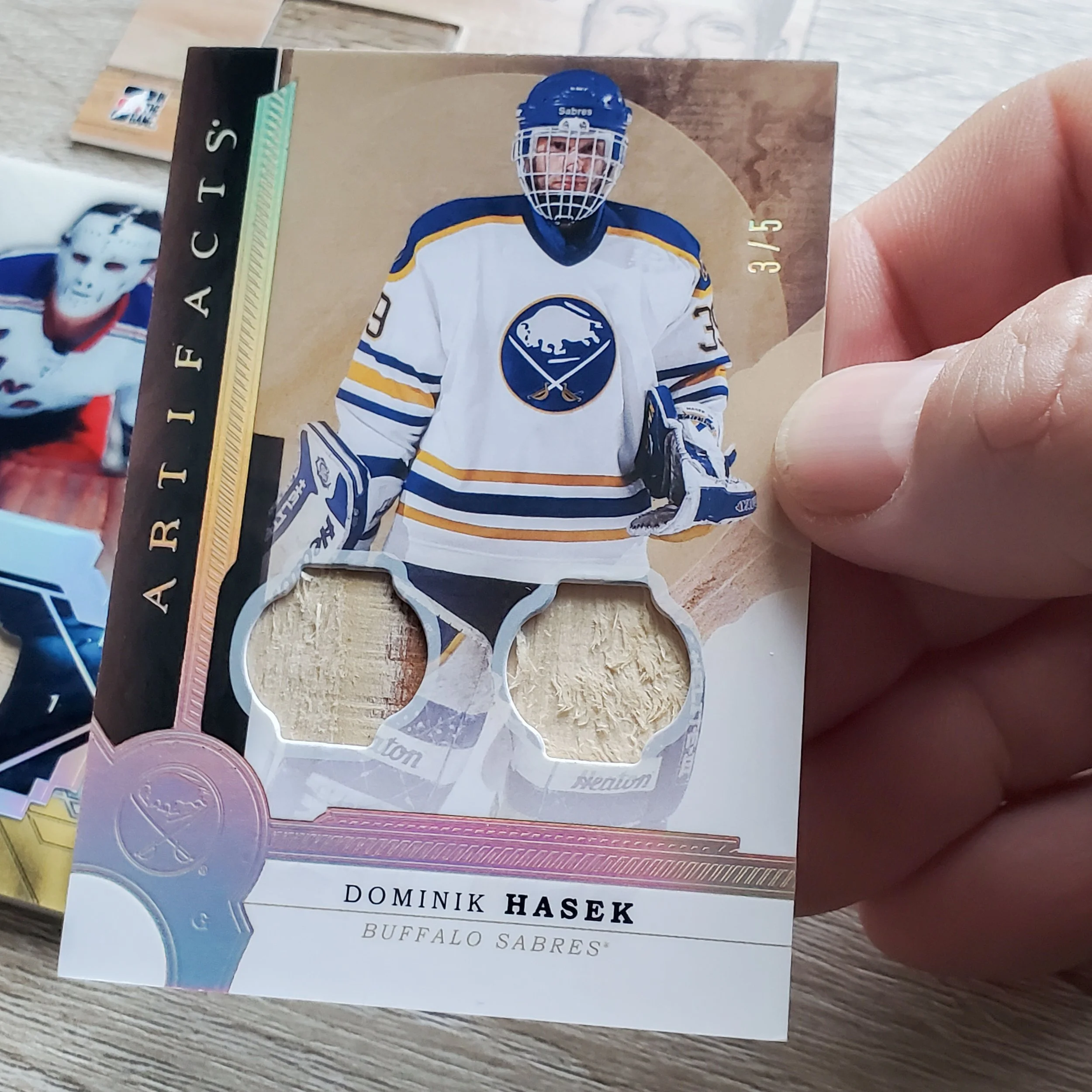
In 1999, Upper Deck did an amazing job layering the stick fragment in the cardstock; collectors wondered how they did it.
Unlike a standard trading card, a stick memorabilia card uses multiple layers of cardstock.
A small window is die-cut into the front of the card, creating an opening where the stick fragment will eventually appear.
Additional wider layers provide a recessed space for the stick fragment. The stick fragment sits behind the opening, secured within the card's construction, typically with non-yellowing adhesive, and then surrounded by additional layers.
The front and back are then bonded together, effectively sandwiching the piece of hockey history inside.
The card's thickness depends on the thickness of the stick fragment placed inside.
Not all Stick Cards are Equal
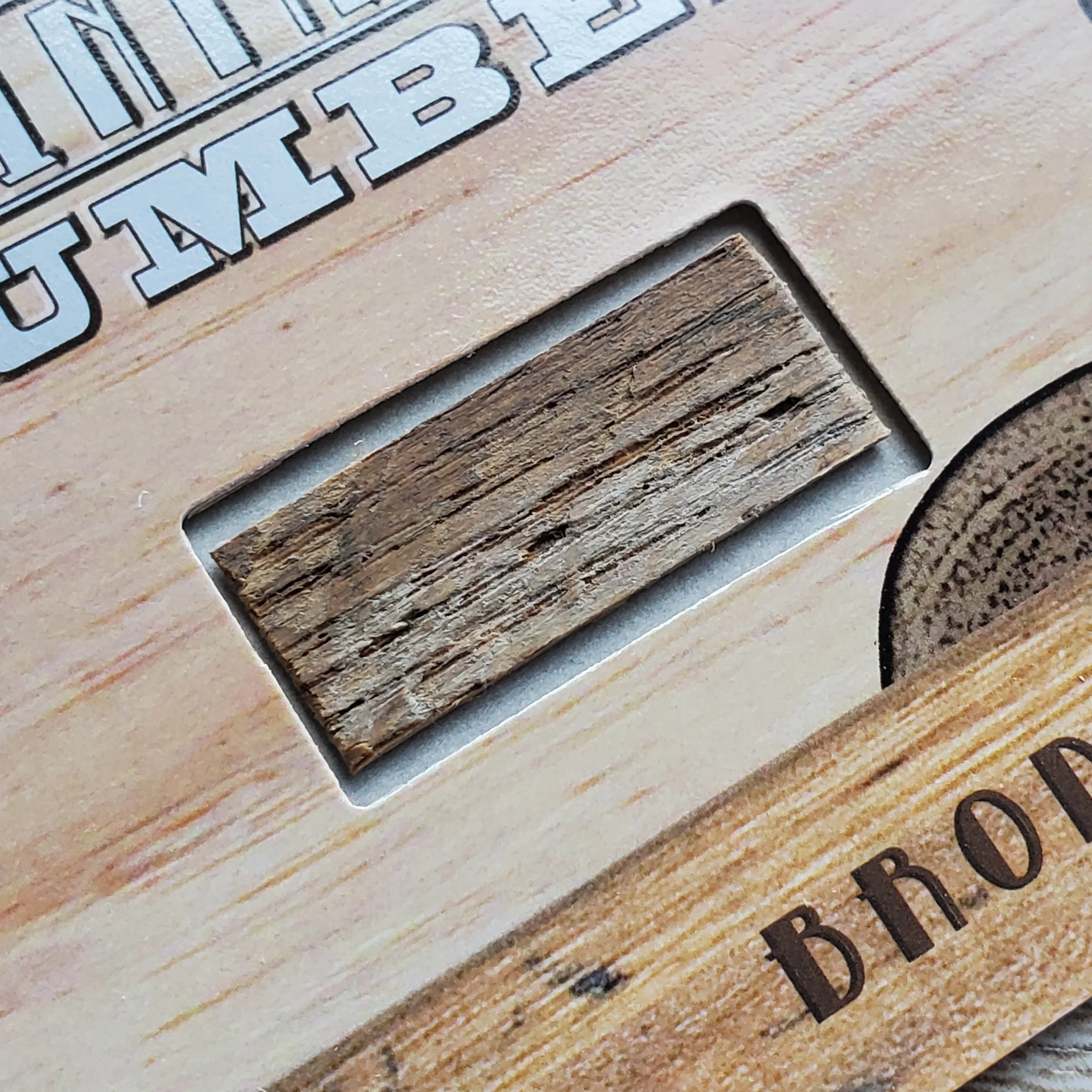
In the early 2000s, companies like In The Game, even when they were licensed, often failed to create effective layered stick-mem cards.
Often these cards had windows cut too wide, or layering wasn’t effective.
This left stick fragments that didn't quite fit, so they simply glued them into the window instead of sandwiching them inside the card.
It was unfortunate because BAP often had incredible game-used sticks from past legends like Georges Vezina, Lorne Chabot, and other HOF greats.
Ruining History?
Hockey historians have debated game-used memorabilia cards for years; some collectors value owning a physical piece of hockey history, while others argue that cutting up historically significant equipment to make trading cards does more harm than good.
As cards with game-used sticks became more popular, manufacturers got a little creative with the provenance. Vague wording on some memorabilia cards let manufacturers produce more. “Game-used” vs. “game-worn” can leave collectors wondering whether the featured player used the material in an NHL game, while letting manufacturers produce more memorabilia inserts.
The Fine Print. Game-Used, Game-Worn, and More
Game-used, game-worn, and player-worn memorabilia are not necessarily interchangeable.
Game-used generally refers to equipment used during a game, while game-worn refers to something a player wore in competition at some point. The distinction for Game-worn could mean the player used it only in warm-ups, not in the actual game.
Player-used or player-worn, on the other hand, can mean a jersey or stick was simply worn or held by a player for a photo shoot, commercial, or promotional event, such as an autograph session, without ever seeing a minute of NHL action.
Rest assured, those Connor McDavid sticks from the CIBC commercials are coming to an Upper Deck series near you
